Creative practice — a quiet way back to yourself
Guided sessions where you slow down, put what you feel into colour and shape, and listen to what comes up — no experience or talent needed.
The sessions are still in preparation — I'll open registration as soon as they're ready.
Learn about the sessions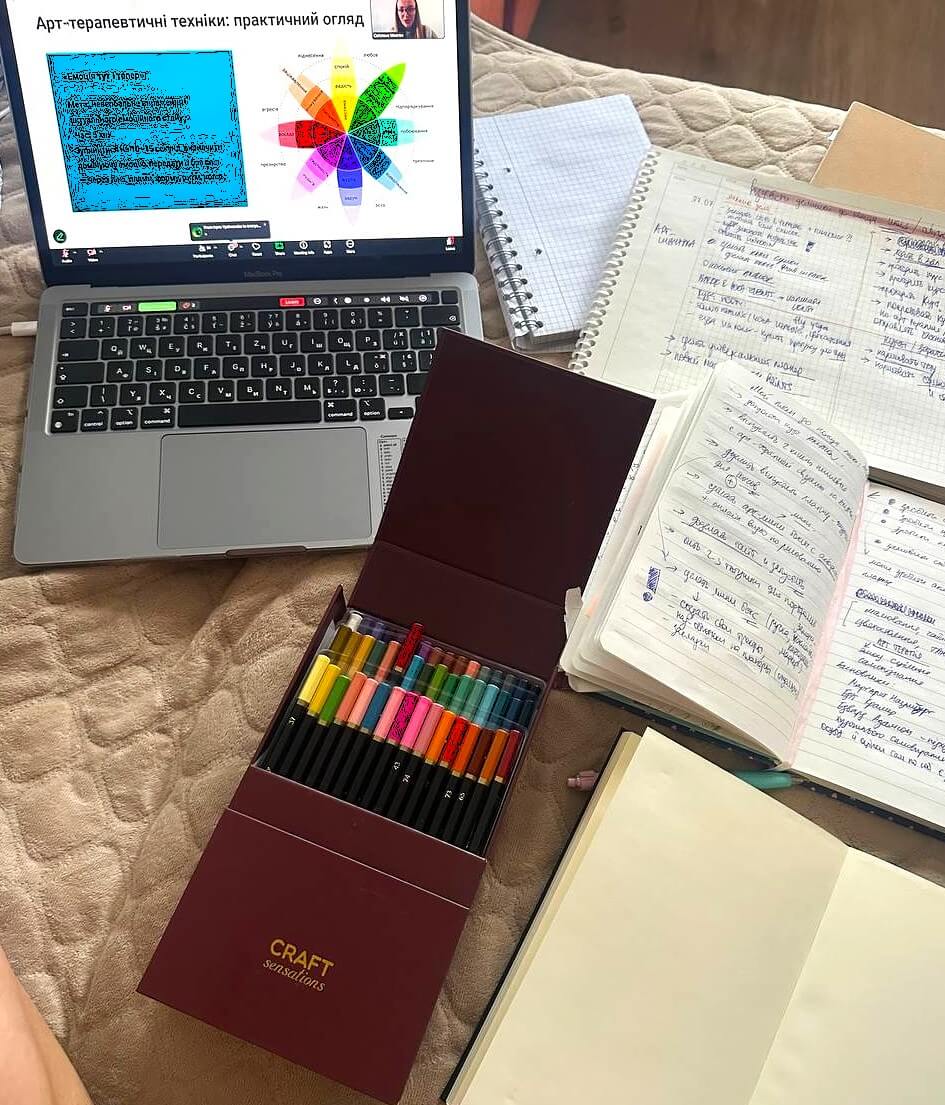
Training in art therapy
I'm currently training in art therapy and preparing to offer guided creative sessions online — both one-to-one and in small groups.
This work uses the creative process as a way of self-expression, reflection and exploring your inner experience. It isn't about artistic ability or creating a "perfect" picture — the process itself is what matters.
The creative sessions are not open yet.
Prefer to explore creativity at your own pace? Discover my online creative courses & tutorials.
Creative approaches we can use
We can use different materials and creative approaches, depending on you, the theme and the process.
- Painting & drawing
- Collage & mixed media
- Clay & modelling
- Mandalas
- Simple printmaking techniques
- Metaphor & association cards
- Storytelling & fairy-tale work
- Writing & creative words
- Photography & visual reflection
- Movement and other creative approaches
No artistic experience is needed.
Want to explore something on your own while sessions are still in preparation? You can start gently with an art-journal box or an art-therapy painting kit.
Who can it be for?
A creative practice can offer a space to slow down, express yourself and become more aware of your own experience. The creative process can help explore feelings, thoughts and experiences that can sometimes be difficult to put into words.
It can be suitable for
- Adults and young people who want to use creativity for self-expression and reflection
- Anyone looking for a different way to express themselves and explore their creativity
No artistic skills or previous experience are needed.
What it can offer
- A quiet space to slow down
- A way to express yourself without words
- More awareness of what you notice and feel
- Time for reflection, at your own pace
- Simple creative habits you can keep for yourself
These are creative sessions, not psychological or medical care. They don't replace professional help from a doctor, psychologist or another qualified specialist. If you're going through a difficult time, please reach out to a professional.
Creative sessions coming soon
I'm still training in art therapy and don't offer sessions yet. When this service is ready, I'll open registration for individual and small-group creative sessions online.
Want to know when they're available?
Training & certificates
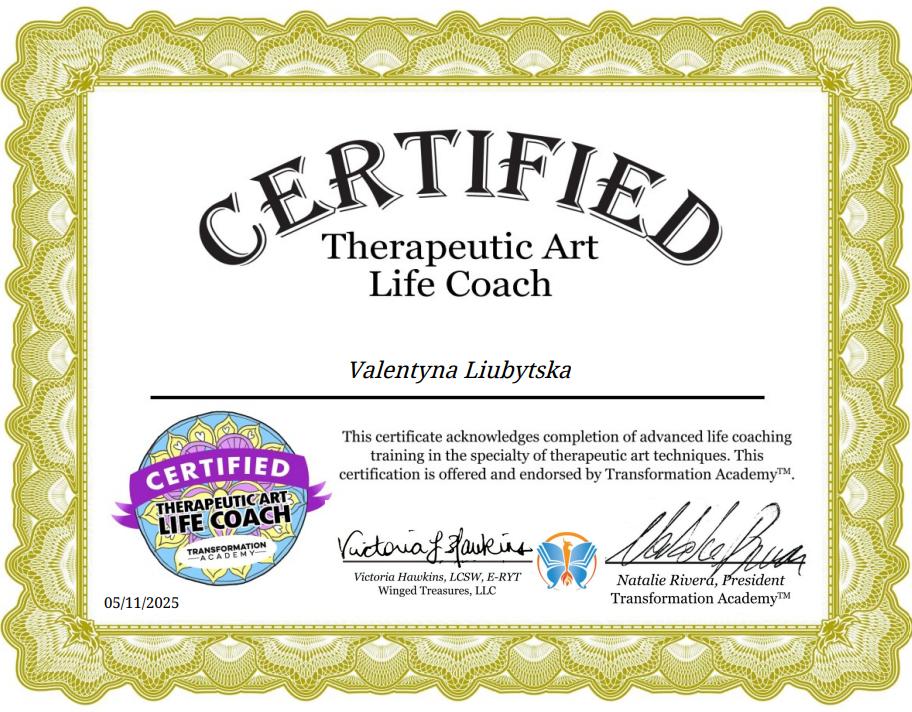
Therapeutic Art Life Coach
Transformation Academy™ · 2025
A coaching course on using creative techniques in personal growth, reflection and self-discovery.
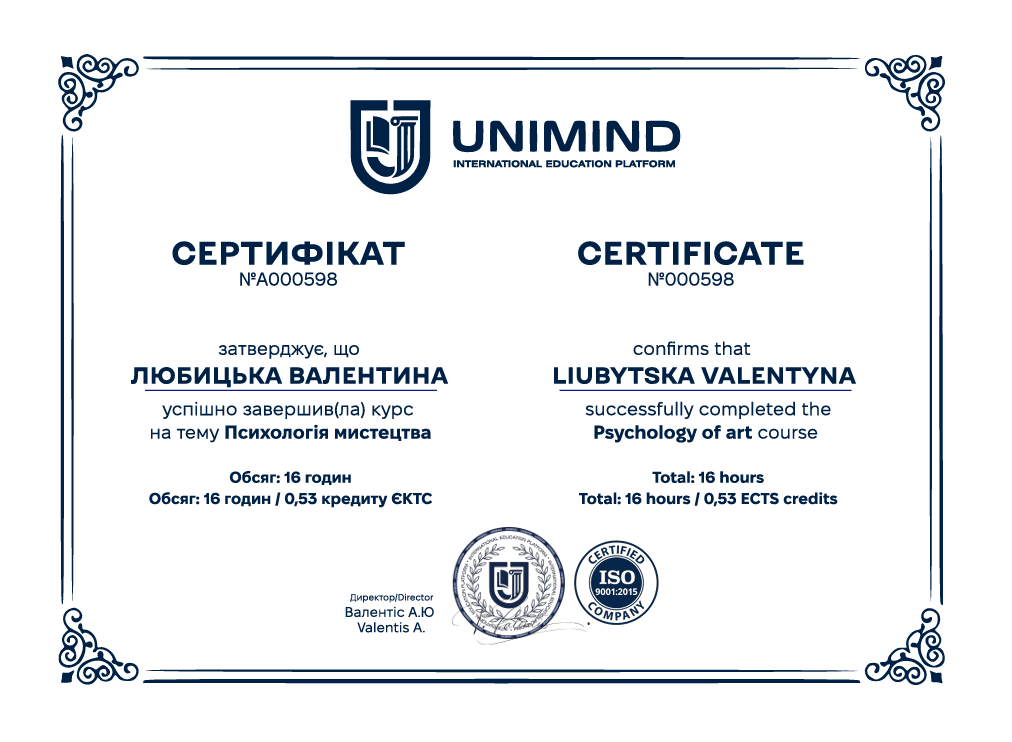
Psychology of Art
UNIMIND · 2025
A 16-hour course (0.53 ECTS credits) on the psychology of art — how art shapes perception, emotion and self-expression.
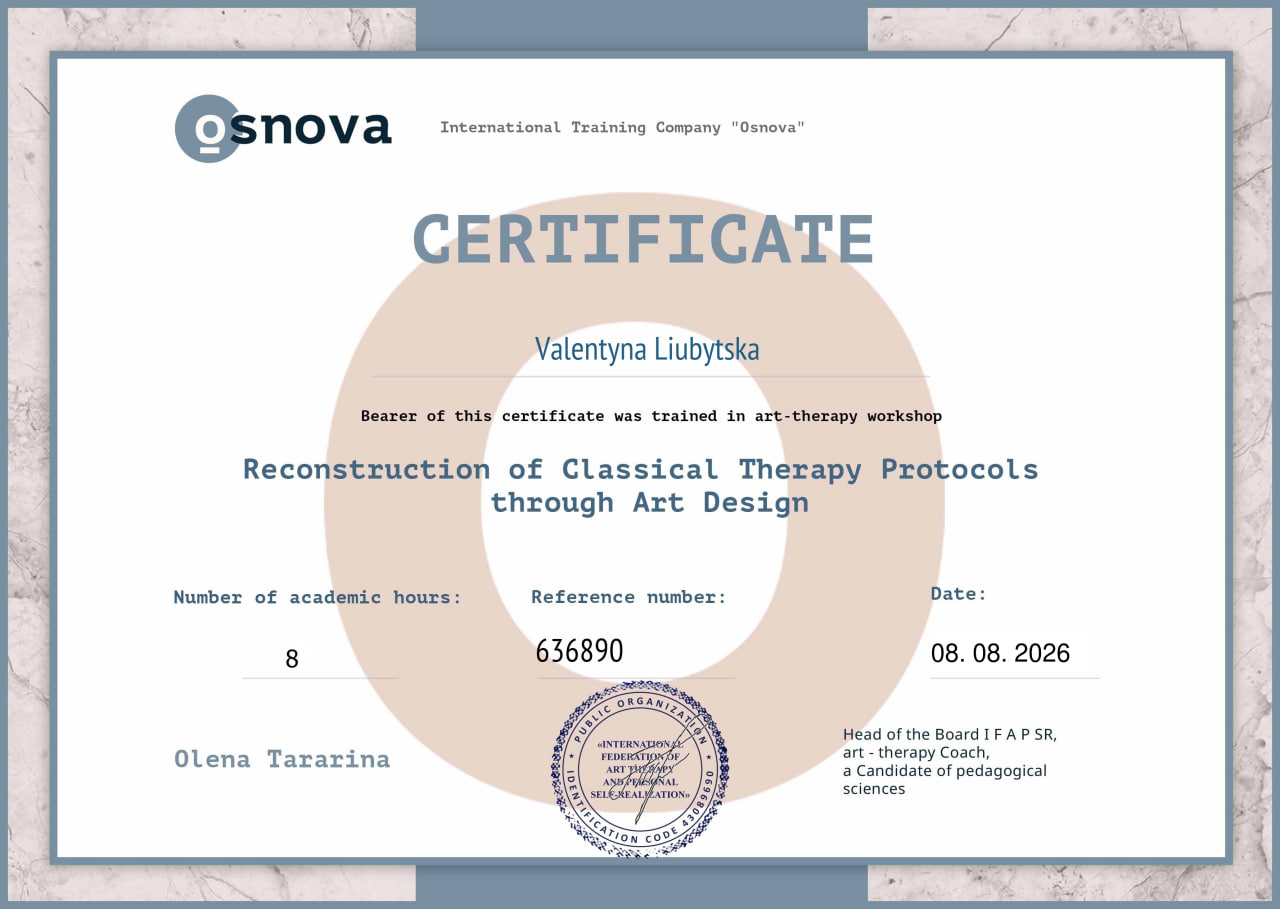
Reconstruction of Classical Therapy Protocols through Art Design
Osnova · IFAP · 2026
Art-therapy workshop by the International Federation of Art Therapy and Personal Self-Realization.
I'm continuing to study and grow in this field, so I can offer creative-wellbeing sessions with care and depth.
Why creativity matters
"Art is a guarantee of sanity."
"I dream my painting, and then I paint my dream."
"I found I could say things with color and shapes that I couldn't say any other way."
Your first session
The first session will be a gentle beginning. We'll get to know each other, talk about what brings you there and explore a few creative approaches together. From there, we can find a way of working that feels right for you — always at your own pace and without pressure.
Before we begin, I'd like you to get to know me a little. I've prepared a short video so you can hear my voice and see who you'll be meeting with.
 Valentyna
Have a question?
If you'd like to ask about the creative practice, the upcoming sessions or anything else — write to me. I reply personally, usually within 1–2 days.